Nurse Hair Don’t Care: A Designer’s Stitch Review
As a designer who spends more time staring at digitized paths than I do sleeping, I have learned that not every graphic translates well to thread. We often see trendy Illustrations and Graphics marketed for print-on-demand, but when you pull them into your embroidery software, the reality can be starkly different. That is why I took a close look at the Nurse Hair Don t Care design. This isn’t just about slapping a quote on a shirt; it is about understanding how this specific asset performs when subjected to the mechanical realities of an embroidery machine.
First Impressions and Visual Personality
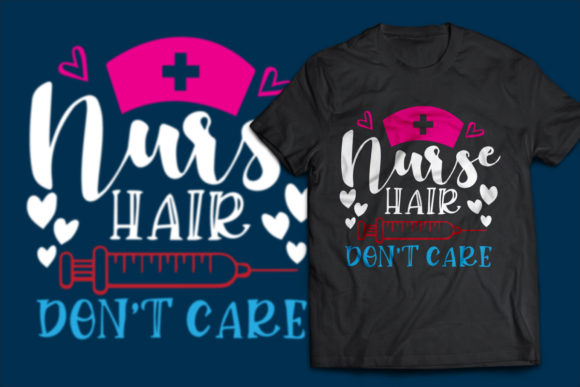
The phrase "Nurse Hair Don t Care" carries a specific cultural weight. It speaks to the exhausted, resilient, and humorous side of healthcare workers, particularly those who have been on the front lines. Visually, the design relies on bold typography and likely some illustrative elements representing messy buns or medical caps. The mood is casual, relatable, and slightly rebellious. For an embroidery project, this attitude needs to come through in the stitch work. If the lettering is too thin or the details too dense, the playful vibe gets lost in a puddle of thread.
What stands out immediately is the versatility implied by the description. Being made with 100 vector shapes means the scalability is theoretically unlimited. However, as any experienced embroiderer knows, resizing a vector does not automatically optimize the stitch density. You cannot simply stretch a small chest logo to a full-back sweatshirt design without adjusting the underlay and stitch angles. This design feels like it belongs in the realm of quick, impactful statements rather than intricate, painterly scenes.
Real-World Application: The Custom Tote Scenario
To test the viability of this design, I imagined a real-life scenario: a local hospital unit organizing a fundraiser. They needed custom apparel and accessories that were durable, washable, and visually cohesive. I visualized using Nurse Hair Don t Care on a heavy canvas tote bag. Canvas has a distinct texture, and the weave can interfere with small details. Because this design is described as having easy color changes, I could swap the standard black thread for a deep navy or maroon to match the hospital’s branding while keeping the text legible.
In this context, the design works because it is bold. On a tote bag, you want high contrast. The "ready to print" nature of the source file suggests clean lines, which usually translates to cleaner satin stitches or well-defined fill stitches in embroidery. If I were stitching this for a boutique product, I would pair it with a neutral fabric to let the thread colors pop. The result would be a handmade product that feels professional yet personal, appealing to nurses who want to wear their pride outside of scrubs.
Fabric Considerations and Stitch Behavior
One of the most critical aspects of evaluating any machine embroidery design is understanding how it interacts with fabric. The description notes that color changes are easy for dark or white t-shirts. This is a crucial hint. Dark fabrics require careful management of pull compensation and potentially a lighter underlay to prevent the garment color from showing through the stitches. If you are stitching this on a black cotton blend, you must ensure the stitch density is sufficient to cover the background without becoming so dense that the fabric puckers.
For stretchy fabrics like jersey knits used in t-shirts, a cut-away stabilizer is non-negotiable. The Nurse Hair Don t Care design, if it contains large blocks of text or solid shapes, will exert tension on the fabric. Without proper stabilization, the finished product will look warped after the first wash. Conversely, if you are applying this to a structured item like a cap, you need to consider the curvature. Large, flat designs do not always wrap well around curved surfaces. I would recommend testing a smaller version of this design on a patch before committing to direct embroidery on a hat.
Commercial Viability for Etsy Sellers
For the Etsy seller or craft business owner, this design represents a low-risk, high-reward asset. Healthcare-themed gifts are evergreen. Whether it is a holiday gift for a nurse friend or a personalized gift for a graduation, the sentiment resonates. The fact that the source is vector-based allows you to create printable mockups easily. You can generate high-resolution previews for your online shop without needing to stitch every single color variation physically.
However, commercial use requires diligence. Before listing this as a digital embroidery file or selling finished items, you must confirm the licensing terms. Does the purchase allow for unlimited physical sales? Can you redistribute the digital file? These are questions you must answer before investing time in production. Assuming the license permits commercial use, this design fits well into a small shop product line focused on appreciation gifts. It is simple enough to stitch quickly, which keeps your production costs down, yet distinctive enough to stand out in a crowded marketplace.
Technical Notes for the Embroiderer
Before you hoop up your machine, here are some practical steps to ensure success with Nurse Hair Don t Care:
- Test on Scrap Fabric: Never stitch a new design directly on your final garment. Use a similar weight and type of fabric to check for registration issues.
- Check Thread Contrast: Since the design is likely text-heavy, ensure your thread colors contrast sharply with the fabric. A subtle tone-on-tone look might render the message unreadable from a distance.
- Review Stitch Density: If you resize the design significantly, check the stitch count. A design that is too dense for a lightweight fabric will cause perforation or stiffness.
- Inspect Small Details: Look closely at any illustrative elements accompanying the text. Are there tiny running stitches that might break? If so, consider merging them into a satin stitch or removing them if they don't add value.
- Verify File Formats: The description mentions vector shapes, but you will need a specific embroidery file format (such as PES, DST, or EXP) for your machine. Ensure you have the correct conversion or source file.
Final Verdict on Design Utility
The Nurse Hair Don t Care design is a solid choice for those looking to add a touch of humor and solidarity to their embroidery portfolio. It is not overly complex, which makes it accessible for beginners, but its vector origin offers flexibility for advanced users who want to customize colors and sizes. It shines best on stable, medium-weight fabrics where the bold lettering can take center stage. While it may not be suitable for extremely delicate materials or tiny hoop sizes due to potential detail loss, it excels in everyday apparel and accessories.
For the creative entrepreneur, this design offers a balance of speed and appeal. It allows for quick turnaround times on custom orders, which is essential for maintaining customer satisfaction. By paying attention to stabilizer choice and thread tension, you can produce a finished product that looks crisp and professional. Ultimately, this design serves as a reminder that effective embroidery is not just about technical precision, but about capturing a mood that resonates with the wearer. When stitched with care, this design becomes more than just thread on fabric; it becomes a badge of honor for those who serve.